
Summary
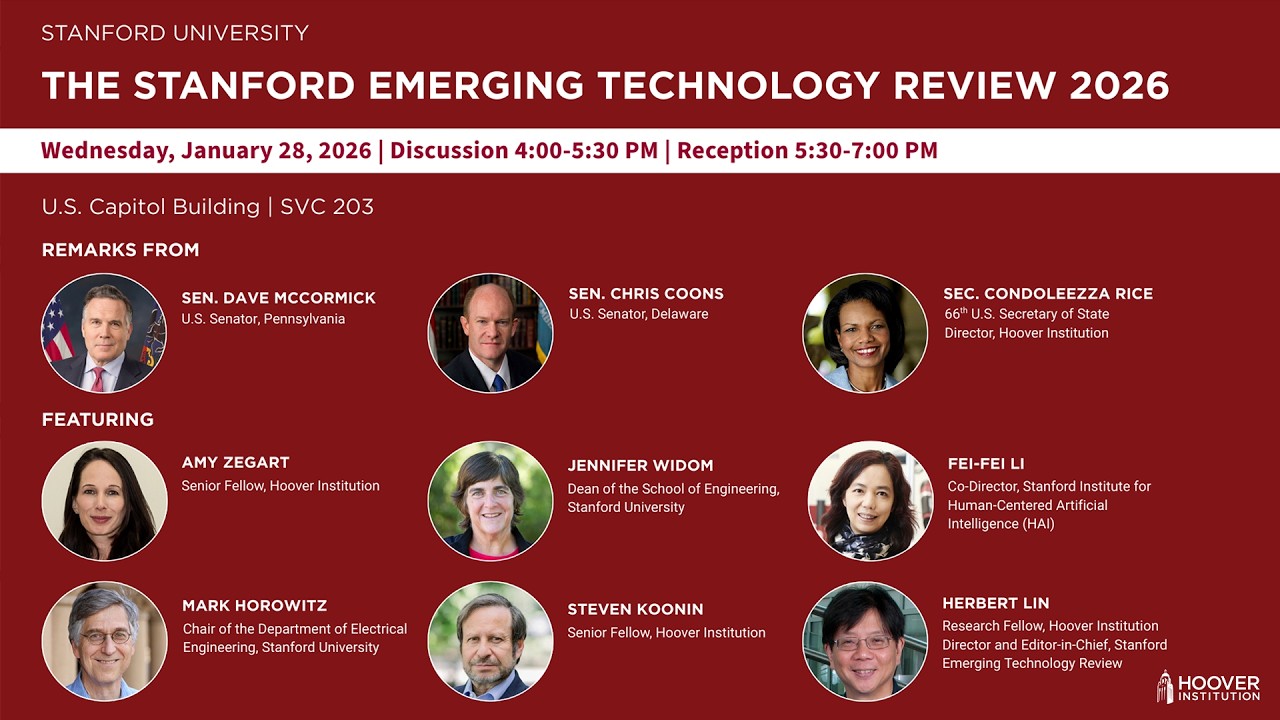
The **2026 Stanford Emerging Technology Review** has dropped, offering a deep dive into **10 frontier technologies** poised to reshape industries and daily life. This year's report highlights breakthroughs in **artificial intelligence**, **robotics**, **biotechnology**, and **space exploration**, among others. The review, published by **Stanford University**, aims to provide a comprehensive overview of innovations that are not just theoretical but are actively transforming sectors from healthcare to communication. It serves as a crucial barometer for understanding the accelerating pace of technological advancement and its potential societal impacts. The report is expected to influence investment, research, and policy decisions globally.
Key Takeaways
- Stanford University has released its 2026 review of emerging technologies.
- The report identifies and analyzes 10 key frontier technologies.
- AI, robotics, biotech, and space exploration are among the highlighted fields.
- The review aims to provide a comprehensive overview of current technological innovation.
- This report is expected to influence future technological development and investment.
Balanced Perspective
The **2026 Stanford Emerging Technology Review** presents a snapshot of current technological trajectories, detailing advancements across **10 key areas**. It outlines reported innovations and their potential applications without explicit endorsement of their ultimate success or societal benefit. The report serves as a reference point for the state of research and development as of early 2026, providing data on progress in fields like **quantum computing** and **sustainable energy**. Its value lies in its comprehensive cataloging of emerging trends.
Optimistic View
This review signals a period of unprecedented progress, where **AI and robotics** will drive efficiency and solve complex problems, while **biotech advancements** promise cures for previously intractable diseases. The focus on **space exploration** hints at new frontiers for human endeavor and resource discovery. This wave of innovation, meticulously documented by **Stanford**, offers a tangible path toward a future of enhanced human capability and well-being, potentially lifting global standards of living.
Critical View
While the **Stanford review** highlights exciting innovations, it glosses over the significant ethical quandaries and potential disruptions. The rapid advancement of **AI and robotics** could exacerbate job displacement and deepen societal inequalities. Furthermore, the report may not adequately address the environmental costs of scaling these technologies or the geopolitical implications of a new technological arms race. The optimistic framing might obscure the urgent need for robust regulation and societal adaptation to manage these powerful new tools.
Source
Originally reported by Stanford Report